
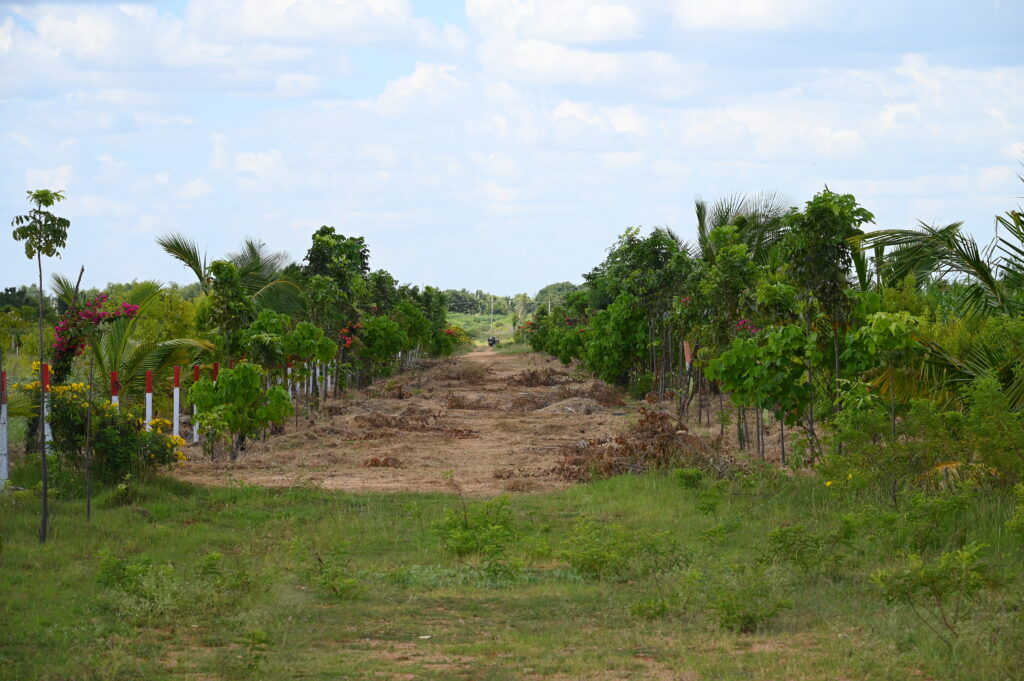

A lot of people believe that investing involves stock picking, flat buying or fretting over mutual fund NAVs on a Monday morning. There’s another asset class older than that that has been performing well and it literally grows out of the ground, though. Huge strides are being made with agricultural land investment in Karnataka by urban professionals, retired people and even by those who are investing for the first time and looking for something tangible, sustainable and financially viable.
This guide covers the entire scenario, from the reason behind Karnataka, what the law really means, what returns are to be expected, where to invest and what to avoid. Real Data Real Logic. Let’s get into it.
Why Agricultural Land? Why Karnataka?
Karnataka isn’t merely the place where Infosys was born and a very strong coffee culture. It’s also one of the most fertile states in India; has a wide range of agro-climatic zones ranging from sandalwood plantation to fruit orchards, agroforestry and spice plantation.
As Bangalore, the state’s capital, sprawls outwards, the land around it is rising in value. Devanahalli, Nelamangala, Kanakapura, Hoskote, and Chikkaballapur have experienced regular land price increases due to the development of infrastructure, the improvement of the highway network and investor interest.
Several land studies and government agricultural statistics indicate that the value of Karnataka farms has been increasing at 8-20% per year depending on the location and quality of management. It’s not forecast — it’s what the market has been doing.
Not to mention the profit from crops and plantations, you have a two-for-one return: capital appreciation and regular agricultural income. It’s a type of thing that won’t break the news headlines, but it will definitely add up to wealth over the course of a decade.
This Was the 2020 Law Change That Opened the Door
It was a cumbersome procedure to purchase agricultural land in Karnataka for a long time. The Karnataka Land Reforms Act, 1961 was amended by Sections 79A and 79B which prohibited nonagriculturists from buying land in agricultural holdings. Those who made more than a certain amount from other sources of income, or were not considered farmers, were essentially barred.
This was changed on 13th July, 2020, with the issue of the Karnataka Land Reforms (Amendment) Ordinance, 2020 (Ordinance No. 13 of 2020) by the State Government of Karnataka.The above was changed on 13th July, 2020 with promulgation of Karnataka Land Reforms (Amendment) Ordinance, 2020 (Ordinance No. 13 of 2020) issued by the State Government of Karnataka. The repeal of sections 79A, 79B and 79C is effective from the date of the repeal.Sections 79A, 79B and 79C are repealed from the date of repeal. The transfer of agricultural land to non-agriculturists was also heavily amended, as was Section 80.
The outcome: now, any Indian individual (with or without agricultural background, job, or non-agricultural income) can legally buy agricultural land in Karnataka.
This was a historic turnaround. Now a software engineer in Whitefield, a doctor at Jayanagar, and a businessman at Mangalore can now buy land in agriculture without any prior farming experience in Karnataka. The amendment also increased the maximum land ownership from 10 to 20 units per person.
Be aware: there has been some political discussion on possibly revisiting some of these changes as of May 2026, but none of the changes have been reversed with legislation. It is important for buyers to keep up to date and always speak to a property lawyer before completing any purchase.
What About NRIs?
This is a common question asked by NRIs and the answer is clear. The Karnataka amendment of the year 2020 paved a way for resident Indian, a different legal regime is in place for NRIs one that is governed at the national level.
NRIs and OCI card holders cannot directly buy agricultural land/plantation property/farmhouse in India under Foreign Exchange Management Act (FEMA), 1999 and RBI regulations. This is not a Karnataka-specific rule. It is applied to all states.
NRIs are only allowed to inherit property, in the form of agricultural land, from a resident Indian relative or as a gift. In such cases the transfer and sale is still restricted and usually is only available to the resident Indian buyers.
It is advisable for NRIs to get appropriate legal advice before investing in the farmland in Karnataka. There are investment avenues that are structured, like partnering with the resident Indian family members, or investing via regulated agri-investment companies, but each has its own legal and tax considerations.
This is the Tax Advantage Nobody Talks About Enough
Surprisingly, agricultural income in India is completely tax exempt at the Central tax level.
Income from agricultural land located in India, such as income from agricultural operations, income from farm land, and income from farm buildings used for agricultural purpose does not form part of your taxable income as per the provisions of section 10(1) of the Income Tax Act. It is not subject to income tax.
This implies that if you earn income from your managed farm land in Karnataka, say from crops or plantations, you don’t have to pay any tax on it. Not just reduced. Tax-free.
This is a big advantage for investors in the higher income brackets. When added with land appreciation, the real yield from Karnataka agricultural land investment is quite higher than majority of the other conventional instruments after considering the tax drag component.
But there is one fine print: Even if your income from non-agricultural sources is more than ₹2.5 lakh, the amount of agricultural income can have an impact on the tax rate to be applied to your non-agricultural income. If your financial situation is complicated, then seek the advice of a CA.
Returnability: What is Realistic?
No hype when it comes to discussing numbers.
The value of agricultural land in Karnataka has risen by 8–20% per annum in the past few years depending on its location and management. Infrastructure corridors with Bangalore-Mysuru Expressway and Kempegowda International Airport belt areas at the top of that range.
The returns on managed farmland projects around Bangalore, where professional firms manage all farming activities, range between 10–25% per annum. This is made up of land appreciation and crop income. Return is highly variable depending on crop, site, management and soil.
Let’s assume that this investment in farm land was made for ₹50 lakh and is expected to appreciate at a conservative 7% CAGR, then the investment value becomes more than ₹1 crore after 10 years without considering any agricultural income.
Some of the high-value crops such as sandalwood, teak, mango and aromatic herbs create different income cycles. Sandalwood is a high terminal value, long rotation crop, for instance, that has low early income. Fruit orchards begin to bear in 3-5 years. Invest based on the timeframe you plan to hold the investment, rather than anticipated returns.
It is Best to Invest in Agricultural Lands in Karnataka
Location is everything. Not every piece of land on the farms is equally valuable; not every land is suitable for every crop. Here is a basic description of some key zones:
North Bangalore (Devanahalli, Doddaballapur, Hoskote)
Capital appreciation is the strongest in this belt in North Bangalore as a result of the industrial corridors and the expansion of airport. Ideal for fruit orchards and mixed plantation models.
South Bangalore (Kanakapura Road, Ramanagara)
Greener, peaceful; more and more popular for organic farming and agro-tourism. It is a good investment for investors with a lifestyle element.
Chikkaballapur & Nandi Hills
Cooler climate and scenic terrain and surging demand from Bangalore’s excess. Adequate agricultural land for vegetables, vegetable crops and for healthful agriculture.
North Karnataka (Dharwad, Belagavi, Haveri)
Land prices are much lower here than the outskirts of Bangalore. This area seems to have enjoyed more gradual appreciation, and to be an appealing place for investors with bigger acreage budgets.
Mysuru & Surrounding Areas
Fertile lands, affordable prices, and the new Bangalore-Mysuru Expressway. Robust investment corridor in the middle term.
Every region is unique in terms of its infrastructure timeline, suitability of crops, and demand of investors. It is highly recommended that all interested parties see the land before buying.
The Key Documents and Due Diligence Process
It is essential to verify the agricultural land investment in Karnataka with precision in legal terms. No exceptions. These are the documents that are important:
RTC (Record of Rights, Tenancy and Crops)
The RTC establishes the present owner, type of land usage and if there is any tenancy dispute. This is the first checkpoint.
Title Deed
The title deed must clearly indicate the ownership of the Seller. It is recommended to have a clean title that goes back 30 years or more.
Khata Certificate & Tax Records
It is confirmed by a khata certificate issued by the respective gram panchayat and a tax payment record.
Land Conversion Status
If farm infrastructure is to be constructed, verify the status of land conversion. No construction that is not agricultural will be allowed on agricultural land without formal DC (Deputy Commissioner) approval.
SC/ST or Forest Land Verification
Check if the land is SC/ST land and/or forest land. Strict transfer restrictions apply on these lands.
Engaging an independent property attorney is not just a good idea, it’s a necessity if you want your investment to be a success and not a headache for you for the next 10 years!
Risks to Be Aware Of
Despite having the proper site and system, agricultural land investment in Karnataka has actual risks which should be explicitly discussed.
Water Availability
The availability of water is a serious issue. In some peri-urban regions of Bangalore, over-exploitation of groundwater is causing water tables to drop. Prior to purchase, check borewell depth, water yield and if drip irrigation system is installed.
PTCL Land Disputes
Unfortunately, PTCL land disputes (involving land granted to STs) are common around the urban fringes. Before taking any action, please inquire about any such designations on the land.
Unrealistic Return Projections
Some of the farmland developers’ unrealistic return projections overestimate yields with numbers that are not withstood in reality. Don’t accept promises in brochures – request project level audited data.
Liquidity Risk
Liquidity is less with liquid than with real estate. It takes time to move your agricultural land, and you have less buyers. Take into account a longer exit window if you need flexibility.
The Bigger Picture
Investing in Agricultural land in Karnataka is not a quick way to make money. It’s a long game, and that’s one that can be enjoyed with patience, proper due diligence, and an appropriate selection of locations. For investors who are willing to seek out something a bit more unique, it’s a tax-efficient, appreciating, productive piece of land with real earth.
The legal landscape in Karnataka is now conducive for non-farming investors as compared to any time in recent years. The investment potential is even stronger because of the agro-climatic diversity of the state, the strengthening of infrastructure and the increasing demand for organic and sustainably produced food.
If you are one of the Bangalore based professionals who want to diversify, a retired person who wants fixed income without fluctuations, or someone who just wants to buy some land which gives them something tangible, then it’s time to seriously look at Karnataka’s agricultural land market.
Simply take your lawyer, tour the ground and ask questions before signing a contract.