
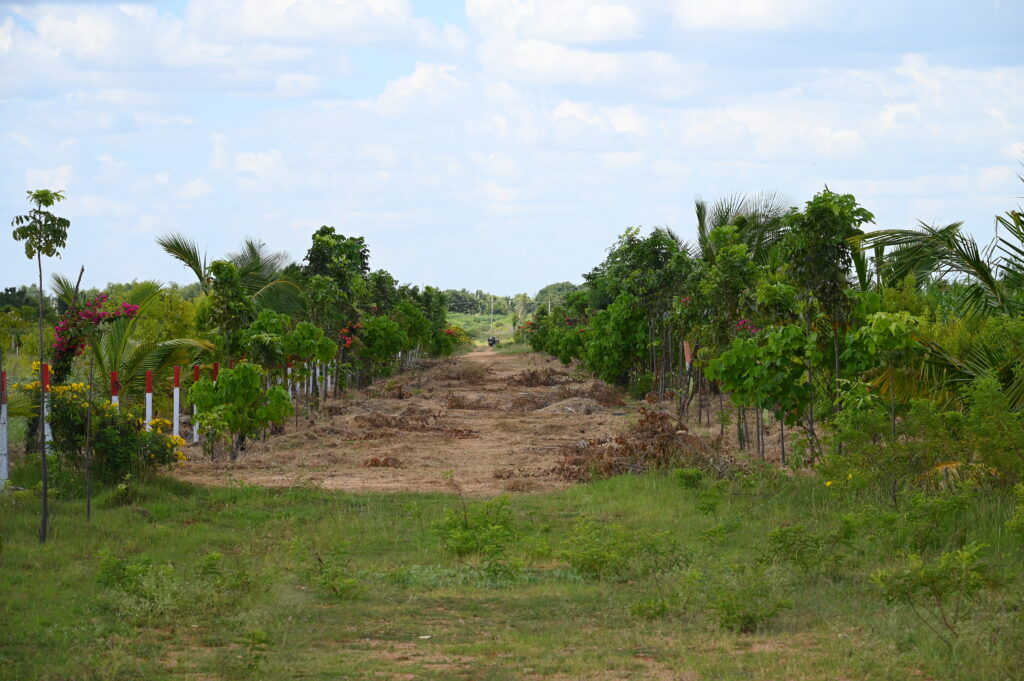

Bangalore is a many-faced city for many. For many it is the birthplace of India’s startups. To some, it’s the city where traffic jams are a way of life. But on the fringes of the community, on the side lanes and even on the roofs, more is going on than is generally appreciated, and it is accelerating.
But right out of the corner of my eye, on the outskirts of the community, on the side roads and even on the rooftops, something is going on here and it’s picking up speed.
Whether you are a Bangalore farmer with 10 acres of land or a flat-dweller, with a balcony and too many dreams, this guide will tell you what sustainable farming is, how it’s relevant to the city of Bangalore, what practices are becoming mainstream, what the government is doing to promote it and how you can participate!
What is Sustainable Farming and Why is it Needed in Bangalore?
The vision of sustainable farming is not new. When it comes down to it, it’s about growing food in a manner that is sustainable for the environment, is beneficial for the farmers’ income and doesn’t bequeath an empty land of exhausted soil and depleted aquifers to future generations.
It embraces practices such as organic farming, water-saving irrigation, crop rotation, integrated pest management and agroforestry practices.
This discussion is very much needed in Bangalore. The city is growing at an uncomfortable pace, gobbling up the farmland especially peri-urban areas such as Devanahalli, Anekal, Hoskote etc.
Studies based on household panel information for peri-urban farmers in Bangalore revealed that farmers’ likelihood of sustainable farming is negatively associated with urbanisation, to put it politely, urbanisation and sustainable farming habits do not seem to play nicely.
That is why it is so important to have purposeful policy and community action.
The Farming Landscape Around Bangalore
The Bangalore Rural District is located in the zone 5 of the state of Karnataka and is predominantly rainfed, receiving an average annual rainfall of about 809 mm, mainly during the months of May and September.
Ragi is the most common crop of the district and is followed by fodder maize, redgram, cowpea and field bean.
It is also a region with a strong identity regarding its horticulture products other than those of its staple crops.
Activities like tomato cultivation, carrot cultivation, bean cultivation, leafy vegetables cultivation is recognised in peri urban areas, such areas are in Devanahalli, Anekal and Hoskote and these are grown for the local markets while floriculture is recognized as an innovative activity in Bangalore, as a key supplier of flowers for the local markets and also for export.
The rural areas around Bangalore aren’t idle, either.
In the year 2025, more than 60% of the farmland projects around Bangalore are anticipated to implement eco-friendly and modern farming methods, as investors are keen to implement such practices and the city’s large healthy populace is increasingly demanding organic food.
Key Sustainable Farming Practices Being Adopted in Bangalore
Organic Farming
Karnataka has been one of the most proactive states in India in terms of organic farming.
The Government of Karnataka has introduced a State Policy for Organic Farming since 2004, and has put in place various schemes to encourage organic production, predominantly through promoting soil health, nature conservation and rural development.
In Bangalore, alone, there are approximately 150 outlets selling organic and millet products and over 50 of these have opened in a fairly short period of time, which indicates a real demand for organically grown produce.
Water Conservation and Drip Irrigation
Water scarcity is one of the biggest challenges in the sustainable farming and Bangalore’s farmers are well aware of it.
One of the most viable solutions that have come up is the use of drip irrigation.
With drip irrigation, farmers can save up to 30-70% water; it not only helps to maximize yield but also lowers irrigation expenses.
It may also boost production by 20–50% over the conventional flood irrigation — a good reason for any farmer to invest.
Karnataka is already a leader in the country in terms of adoption of micro-irrigation.
In the state where major chunk of agriculture depends on monsoons, Karnataka Budget 2025-26 has allocated Rs 440 crore to encourage the use of micro-irrigation in rainfed fields, which is a positive step.
Crop Rotation & Soil Health Management
Crop rotation is an essential and vital practice in sustainable farming, as it helps decrease soil degradation, pest populations, and nutrient depletion, ultimately creating a healthier and more sustainable agricultural environment.
With increasing soil pressure due to intensive farming, ragi, pulse and vegetable farmers in peri-urban belt of Bangalore are increasingly seeking to crop rotation.
This is done by the central government’s Soil Health Card Scheme where soil is tested at every three years and then farmers are provided with site-specific fertiliser recommendations.
It is under the National Mission for Sustainable Agriculture, Paramparagat Krishi Vikas Yojana (PKVY) while its goal is to raise soil fertility in the long term, conserve resources, and produce safe food without agrochemicals.
Agroforestry
Placing trees and shrubs in the framework of traditional agriculture, called agroforestry, encourages biodiversity and improves the overall sustainability.
In the surrounding area, managed farmland projects are using models that integrate agroforestry, adding value to the wood and fruit trees and food crops, and contributing to better land balance.
Urban Farming
In Bangalore, not every farming effort is sustainable and every field is not dedicated to farming.
There has been a subtle change on rooftops and in apartment gardens.
Oota from Your Thota – ‘food from your garden’ is a popular initiative by the Garden City Farmers Trust set up in 2011, which takes place in the residential localities of Bengaluru every three months, comprising of talks, workshop sessions, and organic markets.
As a result of these workshops, approximately 50,000 people are now cultivating 30–80% of their vegetable needs on terrace gardens.
The aim is to achieve a first of one lakh participants by them.
Government Support: What’s Really in It For You?
Policy support for sustainable agriculture systems has significantly improved at the city level in Bangalore and in the state of Karnataka.
In addition to the state’s policy on organic farming, the farmers can avail of various programmes of the central government providing support for micro-irrigation, along with the budgetary allocation for the same.
The Pradhan Mantri Krishi Sinchai Yojana (PMKSY) offers financial assistance and technical training for irrigation systems that use water efficiently.
The government cluster development scheme has so far disbursed Rs 1,150.09 crore, formed 379 Farmer Producer Organisations involving a total of more than 189,000 farmers on 172,966 hectares and established 394 collection and grading units, 123 processing units and 145 vehicles to bolster supply chains in the country as of June 2024.
Additionally, the Karnataka Budget 2025-26 provided Rs 428 crore for 50,000 farmers under a farm mechanisation scheme, acknowledging that affordable and efficient mechanisation is essential to support sustainable farming practices.
Using Technology to Move Sustainable Farming Forward
Bangalore sustainable farming is not all about returning to nature but about moving forward with smarter tools.
The Karnataka government has been encouraging them to adopt precision agriculture, agri-tech startups, and farm management through vocational education and polyhouse farming to support the new generation of agricultural professionals.
With this innovation hub, Bangalore stands to be a unique place where modern agricultural technology and traditional stewardship converge, forming ecosystems which will be the next frontier of sustainable agriculture.
One or two agri-tech start-ups based in Bangalore now provide smallholder farmers in the surrounding districts with soil sensors, drone-based crop monitoring and artificial intelligence-driven advisory services.
The Challenges That Cannot Be Ignored
Change is happening, but so are the challenges.
Agricultural land shrinks with urbanization.
Peri-urban farmers face difficulty adopting sustainable practice in more urbanised areas, as evidenced by increased competition for resources.
For those changing to organic practices, the entry costs are still expensive, and for consumers, the price of organic products is still limited to a narrow market.
While the price of organic and millet produce is high when compared to conventional agriculture the Agriculture Minister admitted that the market is still small, although the government is working towards further expanding it.
There is still a lack of awareness of training and access to training, particularly for smaller or older farming households.
What Does All of This Mean for Investors and Urban Dwellers?
Idealism is giving way to interest in sustainable farmers in Bangalore.
Farmland in suburban areas such as Bangalore is a viable and increasingly attractive asset class because of its many benefits to sustainable farming practices which lead to better soil health, higher production, premium pricing opportunities and superior interest for investors looking to invest in eco-friendly practices.
The opportunities are right under their noses for the urban folks.
The sustainable food movement can also be met face to face, without the need to leave North Bangalore, through community-supported agriculture (CSA) schemes, terrace garden projects or weekend farm visits.
The Road Ahead on Sustainable Farming in Bangalore
Sustainable farming in Banagalore is NOT a hobby for a few special people in Bangalore, nor is it a fantasy for those who want to go on a weekend vacation.
It is a real movement that is both practical and expanding – it’s the result of good government policy, true technological innovation, engaged communities and genuine market demand.
The obstacles are only as tough as the conviction.
Agriculture offers over 10,000 new jobs in tech-driven roles in Bangalore by 2026, beating the growth of many traditional jobs.
So there’s a lesson there: Sustainable agriculture in this part of the world is not a reason to slow down the economy, it’s a reason to grow it.
From a farmer considering going organic to an investor looking at the prospect of investing in a managed farmland or simply a Bangalorean who wants to know where their vegetables are coming from, sustainable farming in Bangalore should be considered.
The ground is laid, the city is ready and the market.