
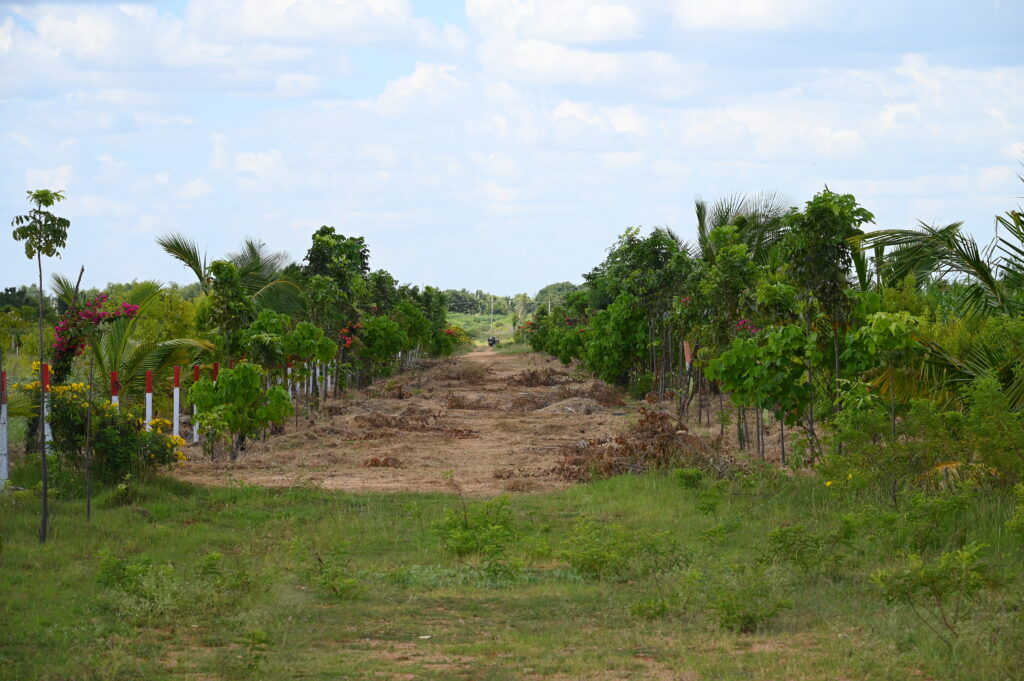

Around Bangalore, land in managed farms has been a very popular investment option today and also a good option to live in, as the investors who buy them will get the satisfaction of owning land and have the potential to earn some income from the farms; but will not be responsible for farming the land themselves. This guide takes the newbie buyer through the concept of managed farmland, how it works, and the areas around Bangalore where it is prevalent, as well as the legal, financial and practical aspects to consider.
Note: This guide is only general information to consider when choosing options. As this is not legal or financial advice, please seek the advice of a qualified property lawyer and financial adviser before making a purchase decision as land law and local regulations may be complex and location specific.
What Does “Managed Farmland” Mean?
Managed farmland is farmland that is sold to individual buyers (usually in parcels of half acre to a few acres) and a professional management company is hired to provide day to day management and maintenance of the property and sometimes crop monetization for the owner.
Buyers typically get:
- Ownership of a particular parcel of land within a larger parcel of land development that has been constructed and is legally owned.
- Shared facilities (irrigation systems, farmhouse structures, security, common areas etc.)
- An agreement with the management regarding cultivation, harvest and maintenance for an annual fee or a portion of the revenues from selling the produce.
- The right to visit, use, or construct a weekend residence on the land, as per the details of the project.
This is in contrast to the purchase of raw agricultural land where the purchaser is responsible for conducting all the farming, obtaining the water supply and managing the land.
Rationale Behind the Decision of Buying Managed Farms Near Bangalore
- Break the cycle from the city on weekends and holidays with a private green space, just a few hours’ drive from the city.
- The possibility of passive agricultural income (fruit orchards, plantations, cash crops, etc., under the management of the buyer).
- Long-term land appreciation – Peri-urban land around an expanding metro may appreciate over time though this is not assured.
- Alternative investment ideas, aside from stocks, mutual funds, or city real estate.
- No farming skills, equipment or on-going involvement needed.
Popular Regions Around Bangalore for Managed Farmland
Areas around Bangalore, which are within 1.5 to 4 hours reach, are offered in the market for managed farmland projects and these are the ones included:
- Kanakapura Road is one of the most popular corridors, which are orchard-style farmland projects.
- Mysore Road / Ramanagara — accessible, farmland communities are emerging here.
- Hosur Road / Denkanikottai (Tamil Nadu border) — famous for weekend farmhouses.
- The Chikkaballapur / Nandi Hills area has a climate conducive to farming and is close to the northern outskirts of Bangalore.
- Kolar and Malur are the areas where the land prices are relatively low and hence are emerging.
The desirability will vary based on the quality of the soil, water availability, road access, and the developer’s past performance, more than the general area — check with the developer.
The Following Are Important Points to Consider When Purchasing
1. Land Title and Legal Status
Ensure there is clear title of land, is legally zoned for agricultural purposes and the seller has valid ownership documents. Request and independently verify:
- Encumbrance certificate: This is a certificate that shows that there are no legal or financial claims on the land.
- Mutation records (shows the land is registered in the name of the seller in the revenue records).
- The Record of Rights, Tenancy, and Crops (RTC) document is used in Karnataka for agriculture land.
- Conversion status (where part of the land has been converted from agriculture to non-agriculture use).
2. Buyer Eligibility
Land laws in Karnataka have always had some limitations on who can buy agri property, especially with respect to the income limit and agri non-agriculturist status. Over time, regulations have changed; check with the local property lawyer before you buy agricultural land to determine current eligibility, as rules can impact both the eligibility to purchase and the ownership of agricultural land in the state.
3. Water Availability
Accurate access to water, whether for cultivation or for any household purpose, is of crucial importance, being provided by borewells, rain water storage or canal water. Inquire about the borewell yield data and know the trend of the ground water table in the area as there are known problems of over extraction in parts of Karnataka.
4. The Management Agreement
The idea of managed farmland is to outsource the work, so read the management contract carefully:
- What is education covered by the management fee (cultivation, security, maintenance, selling) etc?
- Does a produce share exist and if so what is it based on?
- What if the management company is not performing or if the relationship should come to an end?
- Is the contract renewable and how do you get out of it?
5. Developer/Project Track Record
Find out more about the company and ask about:
- Number of projects completed.
- If previous customers have reported smooth and hassle-free title transfers and management services.
- If there are any legal disputes in the company’s history.
It is good practice to carry out some form of due diligence by conducting site visits and having discussions with the existing plot owner.
6. Infrastructure and Amenities
Assess:
- The access to the road (particularly during monsoon season).
- Electricity supply.
- Security measures.
- Any shared facilities (farmhouses, clubhouses, common irrigation system etc.).
7. Realistic Return Expectations
Agricultural income on managed areas of farmland is generally not large and can be quite variable depending on the crop, season and management. Appreciation of land is also not guaranteed and is contingent upon the larger regional development.
Consider managed farmland as a lifestyle and long-term land-holding investment rather than a high yield income investment.
8. Zoning and Future Development Restrictions
Know what can and can’t be done on agricultural land today, including the restrictions on residential structures, as zoning rules change and may restrict future use or development.
Typical Steps in the Buying Process Managed Farmland Near Bangalore
- Shortlist projects according to location, budget and model of management.
- Visit the actual plot to check the soil, water source and infrastructure.
- Legal due diligence – use a property lawyer to check the title, encumbrance history and eligibility.
- Discuss the management agreement in detail, preferably with legal counsel.
- Negotiate and agree prices (registration and any development fees).
- Execution and Registration of Sale deed at the local Sub-Registrar’s Office.
- Post-purchase: ensure that land records are changed to your name and establish the continuing management agreement.
Familiarize Yourself with the Risks and How to Recognize Them
- Lots with unclear or disputed titles, particularly if land has been traded several times.
- Exaggerated sales expectations by developers promoting the investment angle.
- Areas where groundwater is depleted are affected by water scarcity.
- Lack of a strong or informal management agreement that provides little buyer recourse.
- Any changes in agricultural land ownership or use rights that are regulated.
- Illiquidity — the land in agriculture, particularly shared management, may be more difficult to sell quickly than conventional real estate.
Questions to Ask Before Signing Managed Farmland Near Bangalore
- Do you have original title documents and encumbrance certificate?
- So who owns the actual land and how is my particular plot of land defined?
- What is the history of the borewell/ water yield for this particular plot?
- Is it possible to speak with 2 to 3 people who already bought the project?
- What are the exact conditions for me to leave and/or sell my piece?
- If the company goes out of business or changes hands, what becomes of the Management Agreement?
Conclusion on Managed Farmland Near Bangalore
Managed farmland near Bangalore can be a lifestyle improvement and provide a viable investment option for land ownership in a rapidly growing region, but involves a variety of legal, agricultural and management challenges that are unique from purchasing a conventional home or apartment.
It is important for first-time buyers to verify the title in detail, manage the expectations for return, and understand the management agreement, and not be confused by marketing claims. Before making an investment, it’s important to hire an independent property legal professional and personally visit the home, preferably more than once and during various seasons.