
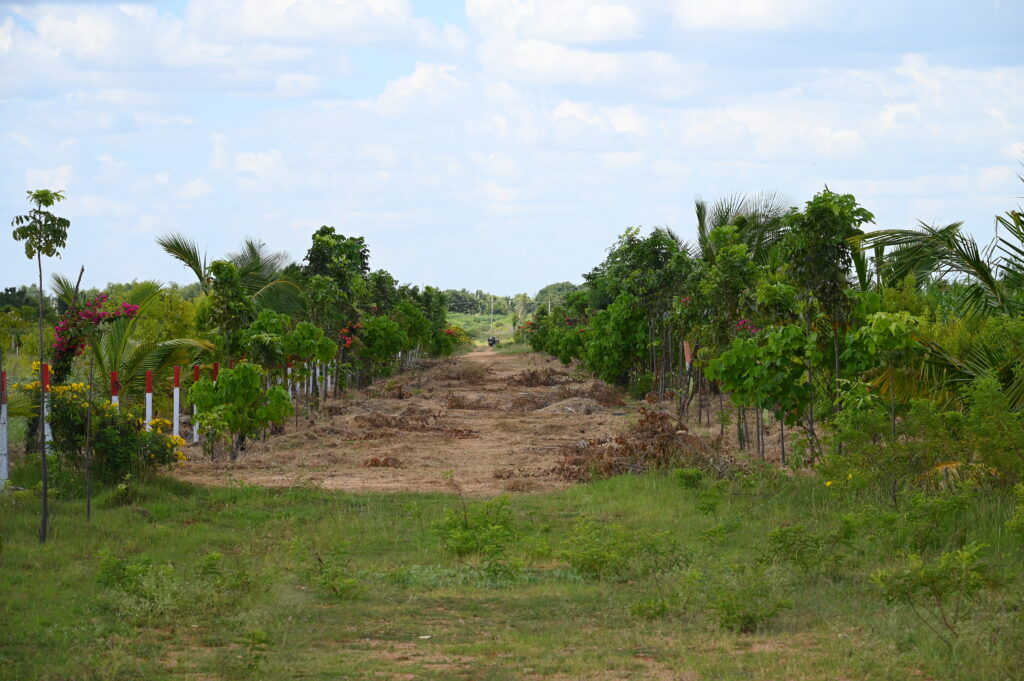

Managed Farmland Near Bangalore purchases have two distinct layers of legal diligence – firstly, the usual land purchase diligence that applies to any agricultural land in the state of Karnataka and secondly, the management contract, which governs the relationship you have with the farm operator. Either can come with a high price tag in the long run, in addition to your initial legal expenses. This checklist is intended to take you through both, item by item.
Note: There are some current data discrepancies (noted) and laws and eligibility requirements for land change are evolving. This checklist is meant to be a starting point and should not be relied upon as an alternative to having your own independent legal counsel review your transaction prior to signing or paying.
Step 1: Confirm Your Eligibility to Buy
The position regarding agricultural land ownership in Karnataka has undergone a complete change in the last few years, and various sources offer different descriptions of the current situation — the main lesson here is the lack of uniformity in the descriptions.
- According to multiple sources, Sections 79A and 79B, which had prohibited non-agriculturists from acquiring agricultural land, were repealed in 2020 and any Indian by now can purchase agricultural land without any restrictions in Karnataka.
- Other sources, however, still indicate an income-based approach, stating that in case of income exceeding a certain threshold, the Deputy Commissioner (DC) of the district may be granted special permission to complete the purchase; so, in practice there may be some income-based checks for certain individuals.
- But, mindful of the political uncertainty, one source says the current legal position is always subject to change, and the laws must be checked with a lawyer before acting.
- A key restriction on NRIs is that the rules of FEMA prohibit them from direct investment in agricultural land, but they can invest through a relative who is a resident of India or an agricultural SPV/company structure.
Action item: Make sure you don’t assume any eligibility rules (including those in this guide) without checking up to date. Before paying any kind of token booking amount, it is advisable to get a Karnataka property lawyer to confirm your eligibility status, which may require DC permission or an affidavit.
Step 2: Check Core Land Documents Managed Farmland Near Bangalore
These documents are essential for any land acquisition in Karnataka for agricultural purposes:
|
Document |
What it Confirms |
|
Title Deed or Sale Deed |
History of ownership usually verified over the last 20-30 years. |
|
RTC (Record of Rights, Tenancy & Crops) |
The single most important document in the Karnataka Agricultural land verification is RTC (Record of Rights, Tenancy & Crops) which confirms ownership, land extent, land classification and any encumbrances and disputes pertaining to the specific survey number. |
|
Encumbrance Certificate (EC) |
Verifies that the property is free of registered loans and/or legal liabilities; best practice is to get an EC for a minimum of 13 years, preferably 30 years for top of the market plots. |
|
Mutation Extract |
Shows that updated ownership has been recorded in revenue after a previous transfer. |
|
11E Sketch / Survey Documentation |
Checks boundary and survey information for the parcel of interest |
|
Land Use / Classification Certificate |
Confirmation of land use classification (agricultural, residential or commercial) – This is significant as the misuse of a land use classification can result in legal penalties. |
|
Property Tax Receipts |
Receipts which show if applicable taxes have been paid; request receipts for the past 5–10 years |
Note: An Encumbrance Certificate will only contain registered encumbrances and transactions — it will not show unregistered disputes, physical encroachments and informal arrangements. Rely on the RTC, mutation records, survey documentation and on-ground inspection in addition to the EC.
Step 3: PTCL (Granted Land) Status Check
It is one of the most neglected risks while buying farm land in Karnataka:
- Even if otherwise income and eligibility requirements are fulfilled, extra scrutiny or Deputy Commissioner clearance may be required, if the land was originally allotted to a beneficiary of the Scheduled Caste or Scheduled Tribe under the PTCL Act.
- A missing clearance on PTCL is a very real risk and can be overlooked – it may be possible for original beneficiary to get the land back years after you have bought and developed it – so this is an aspect to be checked and attended to carefully, and not taken lightly.
Step 4: Check Zoning, Eco-Sensitive Status, and Master Plan Exposure
In addition to the deed, make sure you know what you can and cannot use the land for:
- Determine if the plot is located in any of the environmentally sensitive buffer areas, which may limit activities such as borewell drilling, fencing or application of chemical fertilizers.
- Determine if it is part of any ongoing or planned government master planning project, such as road widening, that may impact both use and future resale.
- Verify the official designation of the land, and if the land use has changed from agricultural to non-agricultural, or would change if you used the land for the intended purpose.
Step 5: Verify Access and Boundary Legitimacy
- Documented road access is legal — informal or undocumented road access can be a potential problem later on, especially when the property is sold to another neighbor.
- Compare the information on the boundaries from the survey sketch with the actual physical boundary on site; future conflicts are often a result of this mismatching.
Step 6: Follow the Registration Documents Required
When you register, please be sure you (or your lawyer) have:
- Title Deed
- Sale Deed
- Encumbrance Certificate
- Khata Certificate
- RTC
- Land Use Certificate
- Property Tax Receipts
- If government allotted property, the original allotment letter and possession certificate for any government-allotted property, as the Sub-Registrar will check the chain of title from the original owner to the current seller.
- The completion of the transaction with the registration of the same in the current digital systems in Karnataka (Kaveri Online, E-Khata etc.) which are meant to curb fraud on paper documentation.
Step 7: Additional Checks Specific to Managed Farmland
In addition to conducting the usual land due diligence, the management layer should be inspected when considering managed farmland purchases:
- The developer/management company’s history of successful projects, references provided by buyers, and any legal issues in their past.
- Conditions of management agreements (fee structure, services covered, produce ownership/revenue split, contract term and conditions for renewal).
- What happens if you need to terminate the use of the management service, sell the plot or the management company goes out of business?
- What the developer has already done, ask them what proportion of the land the developer is rejecting because the developer has done a due diligence process, and ask to see the due diligence process which includes clean title, EC history, and water assessment for your plot and not just the project itself.
Step 8: Obtain Independent Legal Review Prior to Any Payment
- Use a property lawyer that is not recommended or supplied by the developer or management company as there is a conflict of interest if the seller recommends or provides their own property lawyer.
- Before making payment, including the token booking amount, check the land documents and management contract with the lawyer.
- Request specific confirmation on eligibility rules, PTCL, zoning and EC completeness from the lawyer for your exact plot.
Quick Reference Checklist Managed Farmland Near Bangalore
- ✔ Ensured that buyers met the rules for buying into the plan as confirmed by an independent lawyer.
- ✔ Verified Title Deed and ownership history (20-30 years).
- ✔ Acquired and analyzed data from a specific survey number (RTC).
- ✔ RTC and mutation record cross checked with Obtained Encumbrance Certificate (13-30 years).
- ✔ Checked PTCL/granted-land status.
- ✔ The detailed zoning information and any eco-sensitive zone limitations.
- ✔ Exposed to master-plan or infrastructure project?
- ✔ The accuracy and verification of legal road access and boundaries.
- ✔ Confirmed property tax payments history.
- ✔ Checked out the developer/management company’s history and references.
- ✔ Read the full management contract – fees, produce terms, exit clauses.
- ✔ If the lawyer could be found, he or she was asked to review all of the above before payment was made.
Conclusion
The process of managed farmland purchases near Bangalore is not quite as straightforward as buying any piece of property in an urban area — from eligibility rules that are still being finalized, to potential PTCL and zoning issues that seldom come up in a document review, to a management contract that governs your relationship with the operator. The one big piece of advice is that you treat everything like a document and every claim like an independent check, and you never pay anything without having an independent lawyer review it.