
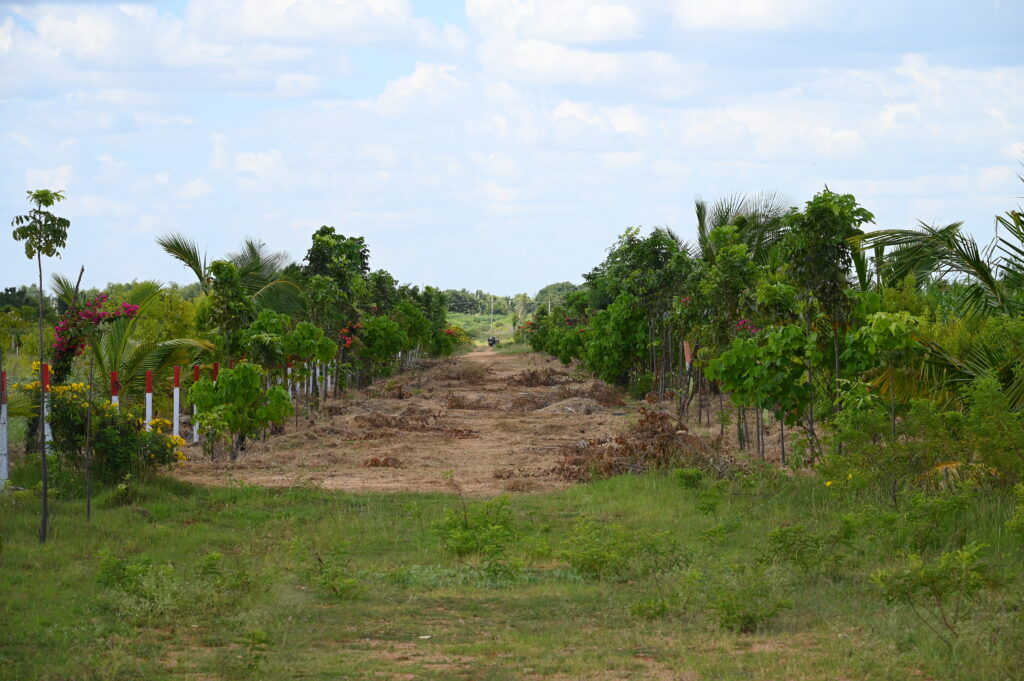

It is here that the majority of people learn only ten years too late. As they were busy arguing about which apartment to buy in Whitefield or which mutual fund to top up, a less vocal group of investors was quietly picking up agriculture land to sell in the outskirts of Bangalore – and watching it increase in value and growing mango trees, coconuts and sandalwood at the side.
This guide belongs to all people who aim to comprehend that market correctly and make a step. Not the brochure version. The actual version – using actual prices, actual sites, actual legal situation and the things that can go wrong when you do not do your homework.
Why Bangalore Is Among the most attractive Markets in India with respect to Agricultural Land
The development of Bangalore is not merely on paper. The city continues to grow, moving out at all major highway lines. What was a decade ago a ten kilometre untouched and unnoticed land, is now surrounded by infrastructure, logistics parks, tech campuses, and new townships.
Look at the way Bengaluru has been growing over the past 10 years, and one thing stands very clear, the city continues to expand outwards and the land at the outskirts will hardly come back down in price. The same demand is projected to increase even more rapidly in 2026, as the development pushes to the outer edges through the creation of new highways, industrial centers, and townships. Places that were considered as too far in the past are now well connected making agricultural land a good long term investment as far as personal use and later reselling is concerned.
As Bangalore has continued to urbanise, there has been a significant growth of value of the city fringe lands. This is an incentive to many landowners on the periphery to sell their agricultural land, capitalising on high prices, and creating new opportunities to buyers. Farmland in Bangalore is becoming a distinct type of investment asset, with farmers, institutional investors, NRIs, agri-tech startups and urban professionals seeking diversification all representing a distinct type of investor in this land.
The mix of a city of boom and agricultural fields on its fringe is uncommon in India. In the majority of large urban areas, farmland that is easy to access has already been priced out. Bangalore is not devoid of opportunity pockets – but the creaking window is closing at an ever-increasing pace.
Major Destinations and what they provide in 2026
All the directions around Bangalore do not provide the same value. All corridors are characterised differently, with different price bands, and different kinds of buyer who suit it best.
There is a reason why Devanahalli is the most talked about place. Devanahalli is fast developing infrastructure and nearing Kempegowda International Airport, as well as future industrial corridors. This is a very desirable region both in terms of agriculture and the appreciation oriented investors who aim at long term profits. The agricultural land may cost between 50 lakhs to 1 crore per acre in places such as Devanahalli, Hoskote and Tumkur road; within the radius of 15 to 30km around Bangalore. The rising infrastructure projects, and location to the city make these areas increasingly valuable each passing year.
Kanakapara Road and South Bangalore are another offer. Kanakapara and Anekal are also after their fertile soil, which is especially favourable towards farming. They are also more and more desirable as eco-tourism and organic farming ventures, with buyers now having a lifestyle intent and investment logic. The agricultural land area of Kanakapara falls between 20 lakh to 25 lakh per acre in the more distant pockets, and very high in closer proximity to the city of Kanakapara itself.
The play is the industrial and logistics corridor Hoskote. Hoskote is located on a significant industrial/logistical route that is linked by major highways. Agricultural land parcels around this area are usually looked at by buyers who are convinced that the warehousing, logistics, factories, and townships will grow in the future. With time, the pockets have been well chosen on the basis of their location near the industrial parks and the major transport routes.
Nelamangala, Doddaballapur and Chikkaballapur are designs that suit first time investors who would be interested in larger landholdings at relatively lower entry prices. The agricultural land prices in regions such as Chikkaballapur, Anekal and Doddaballapur are between 20 to 40 lakh per acre. These areas are a little far off the central areas of Bangalore but are well connected using highways and are accessible to basic amenities making them a solid choice to buyers with a longer investment horizon.
What the Agriculture Land really costs in Bangalore at this point in time
One of the largest issues in this market is price transparency. Sellers are offering very different prices on neighbouring plots, and buyers usually do not have a point of reference.
Prices of one acre of land in the outskirts of Bangalore range between around 30 lakh to almost 14.40 crore per acre in the outskirts of Bangalore. The price of agricultural land in the North Bangalore regions such as Devanahalli, Doddaballapur Road, and around the airport are usually between 2 crores and 8 crores per acre depending on the accessibility and approvals.
In structured professionally run communities with proper titles and working farms, the entry prices of managed farmland plots of one acre near Bangalore are between 200 to 300 per square foot based on location and project.
These figures give you something to think over: the agriculture land on sale in Bangalore is not a one-market place. It is a spectrum of raw, undeveloped land at entry-level prices in far corridors, to premium managed plots with full infrastructure, legal clearance and active crop operations in high-demand zones.
Your right price will entirely be dependent on how long you intend to invest in the farm, how you intend to use it and to what extent you would like to participate in the daily farming operation.
The Investment Case: Why Bangalore Agricultural Land is better than many of these
Now, we can discuss what really drives the returns here, since there are two separate streams and most buyers only consider one.
The former is the land appreciation stream. As Bangalore expands, agricultural land within the well placed corridors gains value just because the need to utilize land, be it in farming, farmhouses, development or future conversion continues to increase. Farm plots around Bangalore are appreciating at annualised rates of 10 to 15 percent in well connected corridors. The contemporary investor now views farmland as not only a retreat but as a strong hedge against inflation, real estate overload and market crashes.
The other stream is agricultural income. Land which is actively under cultivation, whether you personally cultivate it, or you have hired a professional management company to carry out the cultivation of your land, is generating crop revenue. With good soil and water supply in the Bangalore region, farmland investment in the area is projected to yield a ROI of 8 to 15 percent per annum, which is the combination of land appreciation and crop yields in the area. The policy incentives such as subsidies on water conservation and organic farming have created a major tailwind with government focus on sustainable agriculture in 2025.
To this add the tax advantage. Income earned through agriculture is not subject to tax under Indian legislation and thus makes it a potent wealth-making instrument that distinguishes farmland as opposed to rental returns earned through apartments, dividends, and other types of investments that are subject to tax at normal rates.
Sale of farmland in Bangalore is an investment and a lifestyle choice. The more the city expands, the more appealing and attractive these areas are to developers, hobby farmers and investors with slow and steady long-term equity growth strategy.
Who Is Buying Agriculture Land in Bangalore in 2026?
The profile of buyers has been changing drastically over the last five years. This is no longer a farmers and rural landowners dominated market.
The sale of agriculture land in Bangalore currently attracts a diversified pool: farmers and agripreneurs who are taking the opportunities of rising demand of sustainable fresh produce; institutional investors who are using farmland as a hedge against inflation; NRIs; or agri-tech startups who are exploring new innovations such as carbon farming, hydroponics, and vertical farming that are shaping the price and land utilisation trends across the rural locations in Bangalore.
One of the rapidly expanding buyer segments consists of urban professionals, especially IT workers and startup founders who have already saved their money but need something more tangible than portfolios of stocks and bonds. The attraction is obvious: material possession, tax-free agricultural earnings, a place of rest and a safeguard against the uncertainties of the financial markets.
Laws: What You Should Know Before You Buy
This is where majority of the buyers either make it or get into trouble that can only be sorted after a long period.
Purchasing agricultural land around Bangalore is not a question of, liking the greenery or the cost. The actual basis of your investment is the legal clarity. Begin with the verification of RTC (Record of Rights, Tenancy, and Crops). In this document the name of the person who is registered as a lawful owner of the land, the type of land and its use are known. Any difference between what is written in the RTC and what is promised on paper is a definite red flag.
In recent years, Karnataka has become an investor-friendly state. Previously, agricultural land was only able to be bought by individuals who were considered as farmers. The 2020 amendment to the Karnataka Land Reforms Act altered the criteria of eligibility to allow a broader group of Indian citizens to enter the market.
NRIs are permitted to invest in converted residential or commercial land, and purchase agricultural land directly would require adherence to the Karnataka land laws and applicable eligibility regulations – NRIs normally need to channel investment in agricultural land through Indian kinsmen or through some legal structures.
There are three categories of risks that have continually derailed buyers in the agricultural land market in Bangalore. The former is land that is PTCL-secured. Should a plot ever be granted to a family of a Scheduled Caste or Tribe under the PTCL Act, it cannot be sold without special government clearance. The original recipient or the state can have it legally reclaimed years after the purchase is made – always check a PTCL search at the district office before committing.
The second one is master plan conflicts and zoning. The Bangalore Development Authority can even freeze sales or even purchase land on which it can put up the satellite townships or highways. This has been experienced by Devanahalli and Hoskote investors when the notices of the aerospace park were received without expectation. Prior to any payment, it is necessary to check the latest master plan map or receive a zoning letter.
The third one is title chain gaps. Your attorney needs to look at the title deed returning at least 30 years, make sure that there are no mortgages or common claims, and ensure that all partitions of the family and inheritances are well-documented. A clean Encumbrance Certificate of the same period cannot be compromised.
Legal due diligence of managed farm land on sale in North Bangalore should entail land classification and zoning checks to ascertain that the parcel is registered as farm use and not as a future conversion without permissions. The baseline stage is title verification, by reference to updated local land records, and water and irrigation rights form the core asset of any farming venture, which must be confirmed before being purchased.
What to Expect on the Legal Checklist on Top
The land after the legal side is clear requires consideration on its own merits.
The type of soil is critical to the yields. The red soil sustains more valuable crops. Black soil is fertile but requires management of moisture. Rocky surfaces are to be avoided in general. Always make sure to get a soil test before finalising a purchase- the cost is minimal and the information is invaluable.
Water security will be the factor that makes the consistently productive land to be the land that produces nothing in dry years. check the depth of the borewells, the yield and the availability of irrigation canals or other dependable rainfall. Rainwater harvesting systems provide a compliance benefit, and are increasingly regarded as a compliance benefit under the Karnataka sustainable farming guidelines.
Access to the roads and markets will influence your weekend drive to the property and what your crops will fetch when sold. The right direction and village belt is more than price alone. Buyer demand type, soil condition, water access and potential future development are different in each corridor.
One last Timing Word
The years 2025 and 2026 are transformational years, for the people who are interested in purchasing the agriculture lands near Bangalore. Combining the strategic location advantage, strong infrastructure development, legal restructuring, and need to have high-quality sustainably grown produce, land close to Bangalore has become a hot prospect to the savvy investors, entrepreneurs, and agri-enthusiasts.
The possibility is actual and it is recorded. But it pays preparation not impulse. Do the legal documents properly. Go to the land and see. Know the soil, the water and the distance between the access points of the city. And be sure that you are well informed of the manner in which the farming will be conducted once you own it.
One of the few investments in India that can provide capital appreciation, tax-free income, authentic lifestyle value and hedge against financial market volatility all at once is Agriculture land for sale in Bangalore. It is not a very common combination. It should be given some serious consideration.