
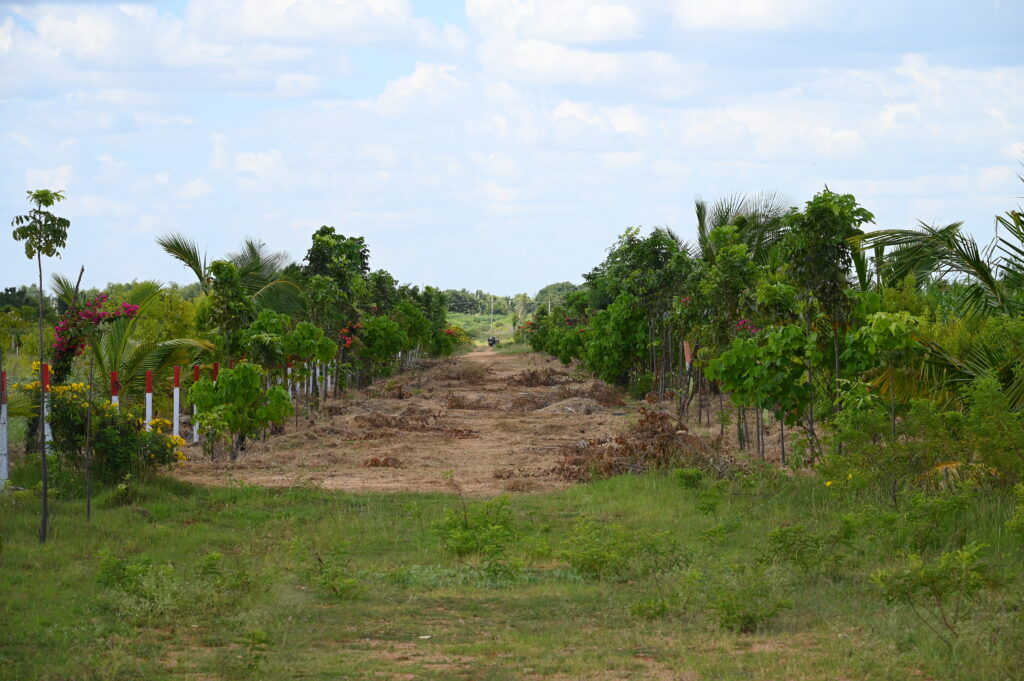

Myth: “Only on Hills” There is a common misconception that Avocados can only grow on high mountain slopes or hill stations. While the tree absolutely dislikes waterlogging, it does not strictly require high elevation. It simply requires expert soil engineering.
The “Smart Drainage” Approach: Mexican Hass trees are sensitive to “wet feet”—stagnant water around the roots can cause rot in less than 24 hours. To counter this on flat lands, modern agronomy focuses on Precision Soil Management. Instead of relying on the natural slope of a hill, success comes from engineering the soil structure itself:
- Root Zone Aeration: Conditioning the soil to remain loose and porous is key. This ensures that even during heavy rains, water percolates through the soil profile instantly rather than sitting at the collar of the tree.
- Oxygen Flow: By preventing soil compaction, the roots get plenty of oxygen, which is just as important as water for nutrient absorption.
Canopy Management: The structure of the tree also matters. Managing the trees to be wider rather than just taller offers two benefits:
- Sun Protection: A wider canopy acts as a natural umbrella, shading the tree’s own trunk and fruit from harsh sunburn.
- Harvest Efficiency: Keeping the trees broad allows for easier harvesting without the need for dangerous industrial ladders.
It is not about the altitude; it is about the agronomy. By using modern farming techniques, land can be optimized to support high-value fruit crops, regardless of whether it is flat or sloped.