
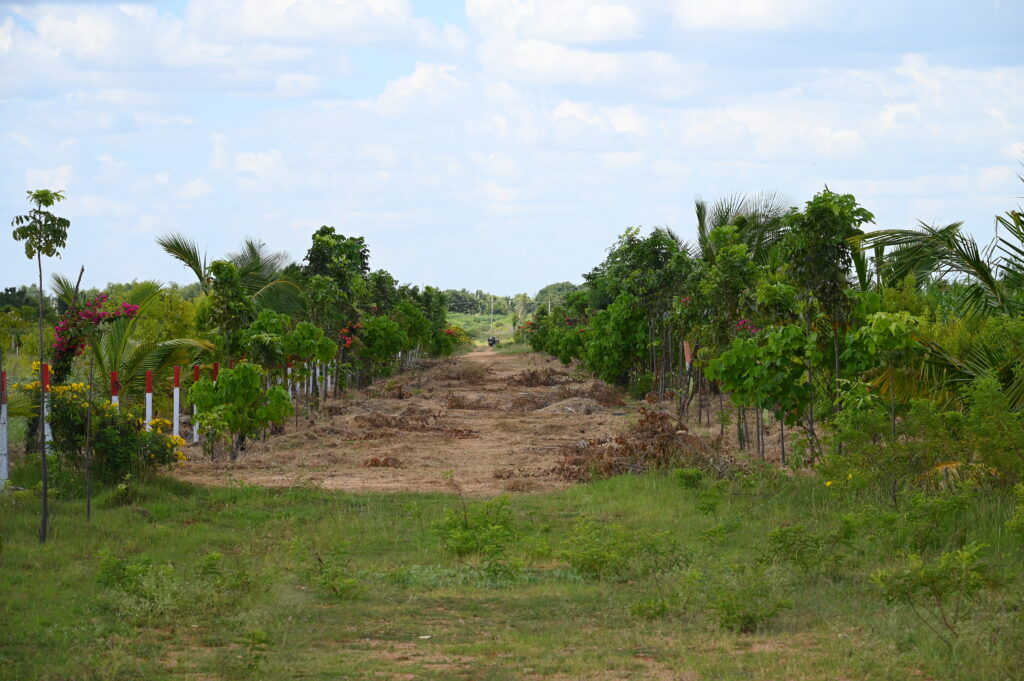

The demand for managed farms in Bangalore has remained steady and active, with both tech professionals and young investors drawn to the investment opportunities these properties offer, which are not tied to the market or urban property. However, the term “good investment” relies on a lot of factors, such as how it’s compared to and what you’re looking for. This guide identifies some of the current pricing trends, expectations of a realistic return, the real nuts and bolts of this investment, and in relation to other asset classes.
Clarification on sources: Online data on prices and returns on managed farmland is largely being provided by developers and management companies for their own ventures. Where useful, this guide refers to that information, but should be taken with a pinch of salt: developer-published data is not audited independently and should be checked against real, project-specific data before it is relied upon. This guide is not intended to give or provide financial or legal advice, always obtain independent financial advice and property legal advice before investing.
Current Pricing Trends (2026) Managed Farmland Near Bangalore
Farmland prices near Bangalore reported vary greatly depending on source, corridor and type of land, whether it is “managed” (infra and services) or raw agricultural land:
- If the land is professionally managed instead of selling raw, and if the farmland is managed in a corridor near Bangalore, it is mentioned that the price of farm land in Karnataka near Bangalore in 2026 ranges between around ₹15 lakh and ₹1 crore per acre.
- While this is generally a smaller range, other sources suggest it extends to ₹50 lakh to ₹2 crore per acre in 2026, depending on the specific area and condition of the land.
- Popular places such as Denkanikottai are often referred to as being around ₹30-70 lakh per acre, where roads, water and soil conditions are all favorable.
- Several brands on managed-farmland projects quote prices around ₹35 to 60 lakh per acre in 2026, with prices varying based on the brand and the site’s geographic location. The prices of a quarter acre vary by brand and corridor; corridors such as Kanakapura are premium with respect to northern or border areas.
- Location plays a crucial role — each additional 10km from the city will cut the price by 10-20% and a distance of 50-80km can be considered as a sweet spot between access and price.
Beware of any single number. The variation between different sources (₹15 Lakh to ₹2 Crore per acre) is indicative of the impact of location, legal clarity, infrastructure and marketing positioning on price — always request a quote for a project rather than assuming a generic figure.
Realistic Return Expectations Managed Farmland Near Bangalore
Farm/Produce Income
Typical management fees or produce income shares reported are generally of around 6–8% of land value per year for the various plantation types and services provided.
The time to income depends on the crop:
- Vegetable and quick-turn crops can yield returns in 12-18 months.
- Fruit trees or timber can yield returns in 3-5 years.
Others point to more recent opportunities for income, like early voluntary carbon-credit markets that can provide a modest income per acre over the long term for implementation of regenerative practices such as cover crops and native tree belts (which are also in the early stages of market development and which do not have assurances or uniformity of payment).
Land Appreciation
Several such anecdotal examples reported by developers indicate significant gains in several years — for example, one project has quoted launch rates of ₹89–95 per sq ft in 2019, and estimated that they will be valued at ₹300 per sq ft by 2026, a gain of about 230%. These are self-reported and are the end result of a project, not a market-wide guarantee.
A separate tale tells of a plot of land bought in Chikkaballapur in 2020 near a plot of approximately ₹82-85 lakh, which was sold nearby — again an individual case, not a representative average.
Caution: Appreciation numbers such as these are almost always taken from projects that worked and were completed that developers feel compelled to advertise. They don’t much say about less successful projects, undeveloped corridors or the variation of outcomes in the broader market. Do not presume an appreciation percentage for any particular period unless you can independently establish it (e.g., available from the registered sale deed records, or an independent valuer).
Advantages of Investing in Managed Farmland in 2026
- Diversification from equities and urban real estate — investments that resonate with those who are not looking for a paper asset with a strong correlation to the stock market.
- Professional management takes out the need for farming knowledge and involvement.
- Dual-use asset — a piece of land that has both the possibility of appreciating in value and also the opportunity of being used for personal leisure and recreation – a weekend residence, for example.
- Indian tax law generally exempts income from sale of raw farm produce from income tax, but the tax treatment of the capital gains on the land is different. Consult a tax advisor for the current tax treatment.
- Appreciation of long-term future is possible within well-connected corridors, where there is growing infrastructure.
Cons and Risks
- Seller-supplied data that is often heavily marketed – pricing and return data is mostly sourced from the land sellers, and seldom verified independently.
- Illiquidity — farmland is more difficult to resell quickly than stocks, mutual funds or conventional urban real estate, particularly when shared management structures are involved.
- Long payback periods: farm income is usually significant only after years (and more often than not, the return per unit of capital investment is modest).
- There is a great deal of legal intricacies involved, such as title verification, rules regarding eligibility of the buyer under the state’s land laws, and registration; all of this needs to be done with due diligence, otherwise it could end up costing a lot.
- Under FEMA regulations, generally NRIs are not allowed to directly hold agricultural land in India, though there are some exceptions, including by holding through an agricultural SPV (Special Purpose Vehicle) structure or resident family member.
- Water and climate dependency – returns are directly linked to water availability and weather patterns, which also have a real risk in parts of Karnataka.
- Management company risk: The whole premise of the “hands-free” is that the management company will operate effectively over many years and that the company will not fail or be unreliable. Failure of the management company or poor management will jeopardize the income and land use.
- The great spread in reported prices per acre indicates that the quality of the product is not consistent – the wide variation in prices (₹15 lakh to ₹2 crore+) clearly shows different products, some of which are not clearly titled, have limited or uncertain water access, and/or have poor management – buyers should not rely on averages based on a corridor, but rather evaluate each project as they see it.
How Managed Farmland Compares to Other Asset Classes
|
Factor |
Managed Farmland |
Equities / Mutual Funds |
Urban Real Estate |
|
Liquidity |
Low |
High |
Moderate |
|
Average holding period |
5–10+ years |
Flexible |
3–7+ years |
|
Income opportunity |
Modest income, uncertain |
Dividends, market dependent |
Rental yield, moderate |
|
Appreciation potential |
Variable (depends on project) |
Market-driven |
Location-dependent |
|
Legal complexity |
High |
Low |
Moderate |
|
Management complexity |
High |
Low |
Moderate |
|
Personal use value |
High (retreat/lifestyle) |
None |
Possible (if residential) |
Questions to Ask Before Investing in 2026
- Do you have verified project-specific yield and appreciation data for the history of the project? Not marketing statements or anecdotes.
- What exactly do they charge for the management and how much does it cost compared to realistically making money from my produce with the size of my plot?
- Does the land title contain a valid encumbrance certificate and appropriate mutation records?
- What is the real water yield and groundwater trend in this particular plot?
- If the management company underperforms, sells or closes, what will happen to my investment?
- What is the actual resale liquidity realistic and what have the resale time periods been for other owners in this project?
Bottom Line on Managed Farmland Near Bangalore
In 2026, managed farmland around Bangalore may be a good investment option for investors who are primarily after a lifestyle asset and a land legacy with a secondary income objective and a long holding period, where the chance of positive (but not guaranteed) land value appreciation is possible. It is not usually a good choice for investors who look for liquidity, income or guaranteed returns.
The one thing that is most crucial to do before investing is to make sure you check out the claims a developer makes about the project that they’ve sold, as many of the available information on pricing and returns is vendor-specific.