
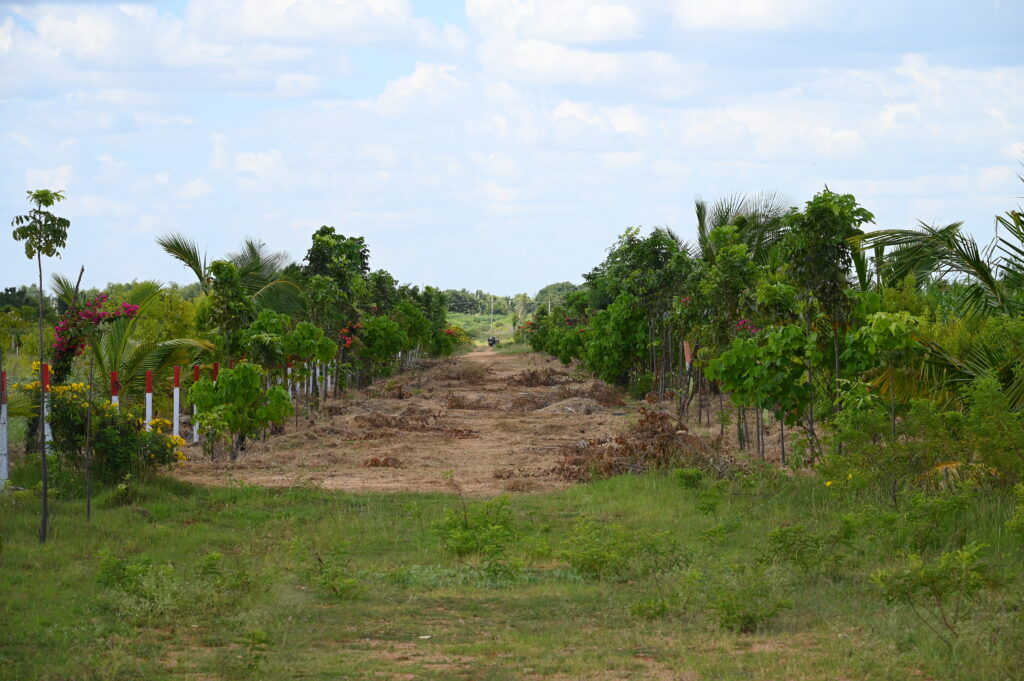

Every few years there is a new asset class that’s the “smart investment nobody’s talking about,” only to be the smart investment everybody’s talking about. Whilst the moment of managed farmland near Bangalore has been one of the many seen, this one is supported by real soil, real crops and a steadily expanding community of professionals who’d prefer to own a mango orchard over track another mutual fund NAV.
This guide explains everything you need to know about managed farmland investment with passive income near Bangalore — how it works, what kind of return can you expect, and which tax laws you need to be aware of that might actually ruin your investment opportunity — as well as some practical tests that you should run before you sign anything.
The Meaning of “Managed Farmland”
Managed farm plot is agricultural land with professional development and long term farm management services embedded. The land is yours to own and a dedicated team do the cultivating, irrigation, security and daily maintenance for you. What that means is the whole pitch, the ownership without the hassle of managing it, and it’s a product that is quite different from buying a plot of raw farmland and taking matters into your own hands.
Buyers instead of rising early to get ready for labour, keep an eye on the irrigation, and deal with the logistics of harvest, are offered land that is already planted and professionally maintained, and that is often accompanied by some basic infrastructure and weekend-stay facilities. It’s a vehicle that’s owned but the headaches are handed off to the provider — and that’s what makes it the most attractive to folks who have a high-pressure job but no farming expertise whatsoever.
Who’s Really Buying?
This user profile is really diverse and should be looked at, as it influences the way different sellers will offer services.
- Busy professionals, especially Bangalore’s dense IT community invest specifically to have the farmland while being away from its day to day operation.
- The managed models often provide more clear and concise legal advice and structure than a private unmanaged land purchase, which is appealing to first-time landowners.
- NRIs are also a significant percentage of this group as professional management allows them to invest in Bangalore’s agricultural land safely from overseas without having to monitor things from the ground.
- But for older people, who are approaching retirement, managed farmland is a good source of passive income and a harmonious way of life, connected with nature over these years which they can devote to their retirement.
The “Passive Income” Is Really Where It Comes From
This is the thing that needs to be grasped in real detail, as “passive income” is mentioned casually in this section.
The first is through agricultural produce itself, and that is agricultural product from professionally managed agricultural plantations – such as fruit orchards, sandalwood, avocado or any other cash crop appropriate to the climatic and soil conditions of the particular region.
There is also a new and growing approach known as agro-tourism/hospitality partnerships, in which some landowners allow a hospitality network to use their farmhouse or eco-cottage, thus generating a genuine passive rental income as well as agricultural production.
The third and most likely the least appreciated aspect is simple land appreciation. Common reasons for providers promoting in this space include annual land appreciation between 10-15 percent for managed farmland in well located areas close to Bangalore (which is to be expected and should not be relied upon as a particular plot’s prospect of appreciation, nor even as a general trend in the market, but instead as a condition that needs to be verified independently from a sales brochure).
Areas of Action: Location Corridors Worth Knowing
Managed farmland is concentrated at certain nodes, usually an hour or two from Bangalore, so it’s within easy reach for weekend outings but still considered to be real countryside.
The popularity of land appreciation has led to Kanakapura Road, Mysore Road and Doddaballapur becoming preferred routes, have a balance of appreciating land and greenery in close proximity. Chikkaballapur and Nandi Hills are located further away, but it is easy to reach them as it takes between 60-150 minutes to reach these places and they are considered among the best places nearby that are growing well. The belt is commonly referred to as the “Sakleshpur to Ramanagara belt”, and each of these areas has a slightly different price vs distance ratio than the other, so aren’t all “the best” by default.
There are also significant differences in plot size and entry investment between these corridors and providers – smaller plots (7,000-8,000 sq ft) are offered for ₹50 lakh or less, and entry costs increase in proportion with plot size. Like any real estate figure a seller gives you, take the starting price as a starting price, not a typical, average price for the entire project.
The Question That Really Matters Most Is the Tax Question
This info is more relevant to a lot of farmland marketing than most people realize and is the difference between a well-informed farmland investor and one who gets an unwelcome shock at resale time.
According to the Income Tax Act of India, agricultural land is either rural or urban, and this distinction is crucial in determining the tax treatment of future sales. The profit on sales of agricultural land in rural areas is not liable to any capital gains tax at all, irrespective of the land’s appreciation. Urban agricultural land will, on the other hand, be considered as a capital asset and will therefore be taxable if it is sold, meaning that urban agricultural land is defined as land located within an urban area (10,000 people or more) or within a specified distance from an urban area (10,000 people or more).
Under the latest rule changes, effective as of July 2024, the tax rate on any gains from your managed farmland that falls into the urban category is currently 12.5 per cent, and/or 20 per cent indexed, whichever is lower. STCG on land that is held for a period of 24 months or less is taxed within the regular income tax rate slabs. Section 54B also provides an exemption option for reinvesting the proceeds into another agricultural plot utilized for farming in the previous 2 years before the sale.
What you take away from this: Before purchasing, make sure you have verified with the seller, and preferably via the local municipal office, whether your particular parcel of land is classified as rural or urban agricultural land. It’s not something a glossy investment brochure will make clear and can make the difference between a tax-free capital gain and a real tax bill several years from now.
Before You Invest, You’ll Want to Know All of the Following
There are a few simple things that can be done to distinguish between a good managed farmland purchase and a bad one.
- Ensure that clear title and legal ownership documents exist on the plot rather than the project.
- Make sure to ask bluntly if the land is considered rural or urban for tax purposes and obtain a written response.
- Don’t assume the definition of “management,” but rather put it in writing — irrigation, security, crop selection, maintenance, etc.
- Request that the income is split into realistic streams of income; agricultural income, income from the hospitality/rental side, and income from the land’s appreciation side.
- Request a realistic breakdown of income sources, instead of one lumped “returns” number.
- And, look at the plots on site before you buy – the photos of the farmlands can be every bit as convincing as the photos of any city apartment.
Common Pitfalls Investors Fall into. Pitfalls Investors Fall into.
Here are some common errors that appear in this section.
- One of the most common examples is taking quoted appreciation rates as a fact, instead of as a reflection of the general market.One of the easiest to cite is that of taking quoted appreciation rates at face value rather than as a reflection of the general market; real returns do vary significantly by location and provider execution.
- Another, and perhaps the most expensive, omission on this list is the failure to run the rural/urban tax classification check, especially when compared with the tax gap between the two types of classification.
- The list is complete with underestimation of how illiquid farmland really is, compared to the stock or mutual fund — this is a long-term investment, and you should not treat it as a short-term investment.
Final Thoughts on Managed Farmland Investment
Near Bangalore, investing in managed farms with passive income truly is a combination of three things many urbanites secretly desire — land ownership, a slower pace of life, and a long term investment asset not subject to the ups and downs of the stock market. However, the model only works as described if title is clear, a proper breakdown of where “passive income” will be coming from and a clear answer on rural vs urban classification of income is obtained before signing. Once they are right, managed farmland becomes so much more than a lifestyle brochure about smallholding — it’s what it says it is: a diversified, professional, piece of countryside, yours for the taking.