
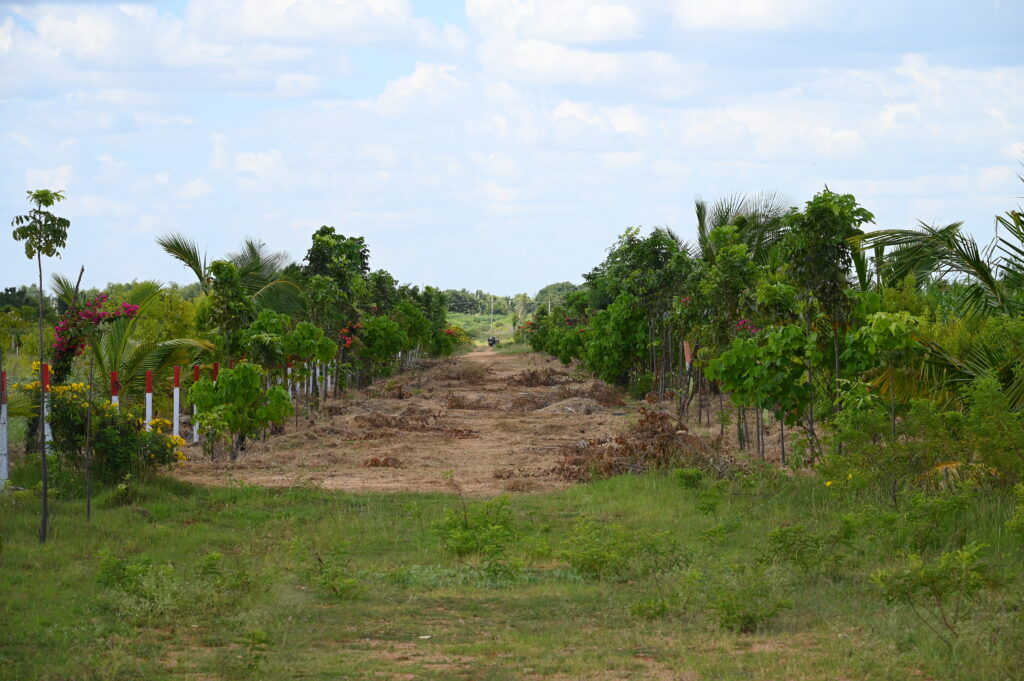

Managed farmland close to Bangalore is a lot marketed to the NRIs to go back to roots, have a long term investment at home, and diversify from foreign investments. There is a critical legal reality that is covered in many marketing materials: NRIs are not allowed to acquire agricultural land in India — regardless of how “managed” or turnkey the offering is. This guide provides details of what the law permits, what paths are open and what NRIs should be aware of before participating in any managed farmland project in the vicinity of Bangalore.
Important: This is a general explanation of the FEMA rules as they are reported. It is not legal advice. The penalties for FEMA violations are severe and it is important to consult an NRI property law expert and an Authorized Dealer Bank before making any decision.
The Core Rule: NRIs are Not Allowed to Directly Purchase Agricultural Land
This is the one thing which is of utmost importance, and this is valid irrespective of any land reform activities at the state level:
- The Reserve Bank of India has granted a general permission regarding acquisition of immovable property in India to the NRIs and Persons of Indian Origin (PIOs) except agricultural land, plantation property and farm-house.
- Under FEMA, NRIs are not allowed to buy agricultural land, plantation property or farmhouses in India irrespective of the intent or time frame of the investment.
- It is also applicable to OCI (Overseas Citizen of India) card holders: Both NRIs and OCI card holders are ineligible to buy plantation property, farmhouses and farmland even under the name of a third party or power of attorney under FEMA.
So, Why Does This Surprise Many NRIs?
This is a state level policy change in Karnataka that was relaxed in 2020, and many times, NRI agricultural land buyers get this fact wrong. Crucially: A relaxed state law, however, which gives any Indian citizen the right to purchase farmland in Karnataka, is blocked at the FEMA gate for those whose residential status is that of NRI, OCI or foreign</cite>. In other words, it cannot be assumed that the relaxation of NRIs’ farmland purchase rules applies to the NRIs reading the news on the change, but only the resident Indian non-agriculturists. The Karnataka reform did not affect the separate, federal FEMA restriction on NRIs, it only affected who can buy amongst the resident Indians.
As of Yet, There is No Explanation for Why the Restriction is in Place
This is not a technical loophole or oversight, it is deliberate policy to stop speculative investers from entering into agricultural land and make sure it is used as it was planned. The policy purpose of treating agricultural land differently from residential/commercial land is because of this.
What NRIs Can Do Legally
There are viable ways to come by land for agricultural production close to Bangalore, even if it is not directly purchased.
1. Inheritance
The NRIs can inherit the agricultural land from any person without the same limitations as they will have for a direct purchase. This option does not come with the FEMA purchase prohibition.
2. Gift from a Resident Indian Relative
Parents are an eligible relative for the purpose of giving agricultural land to NRIs. For NRIs who have their family members already holding land in and around Bangalore, this is a very popular route to acquire the land.
3. Land Owned Prior to Becoming NRI
The prohibition does not apply to land acquired before the change of status to NRI by NRIs, but only for purchase of new land.
4. Special RBI Approval (Rare)
The RBI can allow an NRI to buy agricultural land, but it is only in exceptional cases that this is allowed, and this is usually done on application for “Prior Approval” submitted through an Authorised Dealer Bank. This is a non-reliable, and not a common pathway — the RBI grants such approval in exceptional cases and NRIs should not plan to do so.
5. Regaining Resident Status
If an NRI becomes a resident in India under the FEMA provisions (usually more than 182 days in a financial year with the intention of staying) he/she can acquire agricultural land as other resident citizens of India can do so under the existing laws of the State. For NRIs who would like to eventually return to India, this is a feasible long-term process towards direct ownership.
6. Company / SPV Structures
In some Managed Farmland Near Bangalore developers, although the title of the land is held by an Indian registered entity or by an agricultural SPV, the profit or usage rights are given to the NRI as a unit holder or investor, instead of NRI owning the land directly. Offered as a work-around by some developers, but the legality of these structures is not equal — always have independent legal review of any such arrangement — improperly structured SPVs can also come under FEMA scrutiny.
7. Leasing
NRIs holding family land overseas usually enter registered agreements with the local cultivator, or take up a farm-management service of an existing land parcel that is already legally owned (e.g. through inheritance) rather than a means to new land acquisition.
This is a List of Things That NRIs Should NOT Do
- This limitation does not create a legal exception – even if a agricultural land is acquired through a third party or power of attorney.
- These proposed state-level changes are still at the advocacy and consultation phase and are not finalised as of early 2026, so no purchase should be made based on expected rule changes which authorities have not yet finalised.
- Managed farmland is not the same as a label, do not presume that the FEMA analysis changes. The prohibition is rooted in the land’s definition as agricultural, and doesn’t matter if the land is marketed or serviced after the prohibition.
Violations of the General Rules
This isn’t a petty detail — it carries significant repercussions:
- The fines for violating the FEMA conditions of agricultural land acquisition are up to three times the purchase price of the land.
- In cases of violations, the property itself can be confiscated, in addition to financial penalties.
- If a FEMA purchase takes place in violation of the FEMA prohibition, it is a contravention that may result in penalties and would be legally subject to the title for an indefinite period of time even if it looks like it is working in the short term.
Common Compliance Trap: Land Classification
A common but overlooked hazard is the classification of land as opposed to its actual marketing:
Unfortunately many of the properties being sold as “residential plots” or “farmhouse villas” are still officially registered with the government as agricultural land, and can therefore result in a FEMA violation for the purchaser, if there is no change in the classified status.
If the land is lawfully converted from agricultural to non-agricultural business with proper documentation of converted status in the relevant records, then the land is no longer under agricultural use and can be purchased by an NRI on a residential/commercial basis. But the conversion needs to be confirmed on the record not just by a seller.
Action item: If you are thinking about buying any “managed farmland”, or “farm plot” as it is euphemistically termed, make sure to check the classification of the land, as it appears in the real official revenue records, not in marketing materials.
Tax Considerations for NRIs
It is important to remember that tax considerations for NRIs in respect of their agricultural land are different and if the land is held with legitimate documents, the taxes are also different.
In case of NRIs who have legal ownership of agricultural land (either by inheritance or gift):
- In case of selling inherited agricultural land, <cite index=”23-1″>a maximum of $1 million is allowed to be repatriated per year, and the capital gains tax is to be paid along tax deducted at source (TDS)</cite>.
- NRI owned agricultural lands have limited options for liquidation, as it is often available for residential buyers alone and is subject to state specific regulations.
How It Relates to Engaging with Managed Farmland Marketing
When a NRI is being approached for a managed farmland opportunity in Bangalore ask them in writing:
- What is the form of the asset — direct ownership, SPV/company or other?
- If it is an SPV-type structure, has this been reviewed independently by a lawyer who is not associated with the developer and complies with FEMA?
- Is the land used for agriculture now in the revenue records, and if converted would it be officially recorded?
- What if there is regulatory review of the ownership in the future? What then will become of my investment/usage rights?
- What is my realistic and actual exit, and repatriation, options?
Be wary of any developer that does not mention the FEMA restriction at all or suggests that the “managed” status will take care of the ownership issue — it doesn’t.
Conclusion on Managed Farmland Near Bangalore
In case of NRIs, this fundamental law has not changed since the land reform laws relaxed for resident Indians: purchase of agricultural land is prohibited even in Karnataka, according to FEMA, and the repercussions for such buyers are harsh. There are valid alternatives — inheritance, gifts from family members who live in the area, the resale of previously acquired land, reacquiring resident status, or careful planning by setting up an SPV — but they have their own set of legal details that require independent consideration. Before entering into any farmland being managed by a company that sells them to NRIs, be sure to understand how they would be owned in your case, and verify it with a lawyer with expertise in the NManaged Farmland Near BangaloreRI property laws, not the assurances of a developer.